The Last Time Gold Looked Dead, It Rose Sevenfold
Gold is down 25% from its record and the miners fell 36% into the fattest margins they have ever earned.

In December 1974, gold looked finished.
The price had run from $35 an ounce to nearly $195 in four years, and then it came apart. Over the next twenty months, gold lost almost half its value, sliding to about $103 by the summer of 1976.
Newspapers ran the obituary, investors who had cheered the climb sold near the lows, and Wall Street called the whole thing a bubble that popped.
They were early, and they were wrong, because from that 1976 low gold rose more than sevenfold to reach $850 by January 1980. The people who sold to the headlines missed the greatest run the metal has ever had.
I keep that story close right now, because gold has just fallen about 25% from its January high, and the same obituaries are being written again.
A Rally With Real Fuel
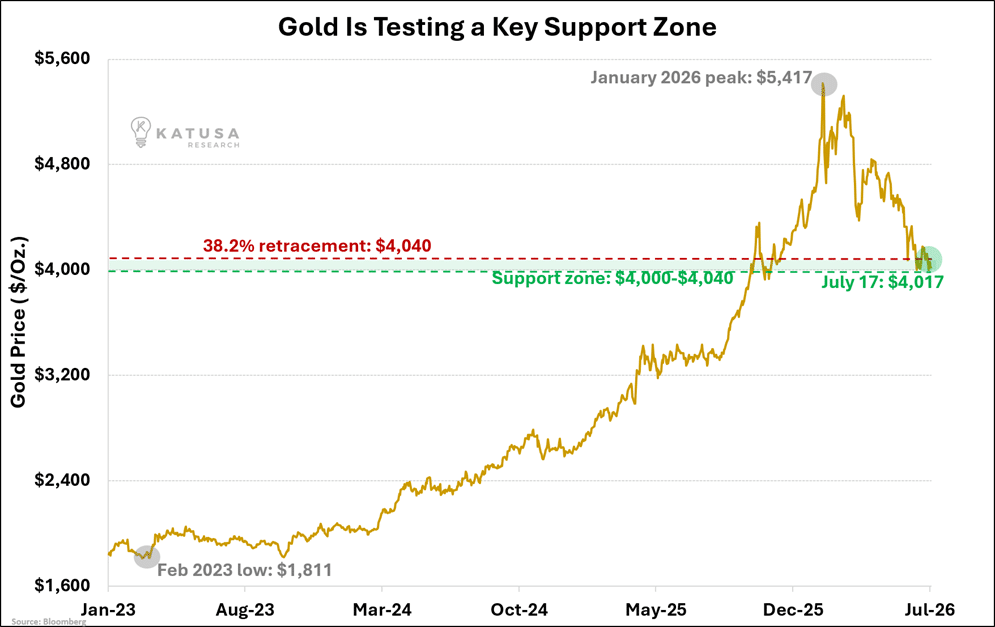
Gold nearly tripled from $1,811 in February 2023 to $5,417 this past January, and the buying came in serious volume.
Central banks around the globe added a net 1,182 tonnes between January 2023 and May 2026.
A new kind of buyer arrived too.
Tether, the company behind the largest dollar stablecoin, lifted its gold from 53.58 tonnes in the first quarter of 2023 to 132.18 tonnes by the first quarter of 2026.
On top of that steady demand sat a bet about the Fed. Through 2025, investors piled in expecting rate cuts in 2026, a softer dollar, and lower yields.
That combination lit the fire, and by January, gold had never been more expensive or more loved.
Iran Changed the Math
The war arrived at the end of February, and it reached gold through a chain that few investors expected.
A conflict in the Gulf drives energy and shipping costs higher across the whole economy, and those rising costs push inflation up. The Federal Reserve treats hotter inflation as a reason to keep rates unchanged, and that strips away the rate cuts gold had been counting on.
And, gold was up a lot, so selling was expected.
At its June meeting, the first led by new chair Kevin Warsh, the Fed left rates where they were. It held its target range at 3.50% to 3.75% and raised its 2026 inflation forecast to 3.6%.
Nine of the eighteen officials penciled in a rate hike for this year while only one saw a cut. In early 2026, markets expected two rate cuts. By mid-July, they had flipped, pricing close to a 60% chance the Fed hikes by September.
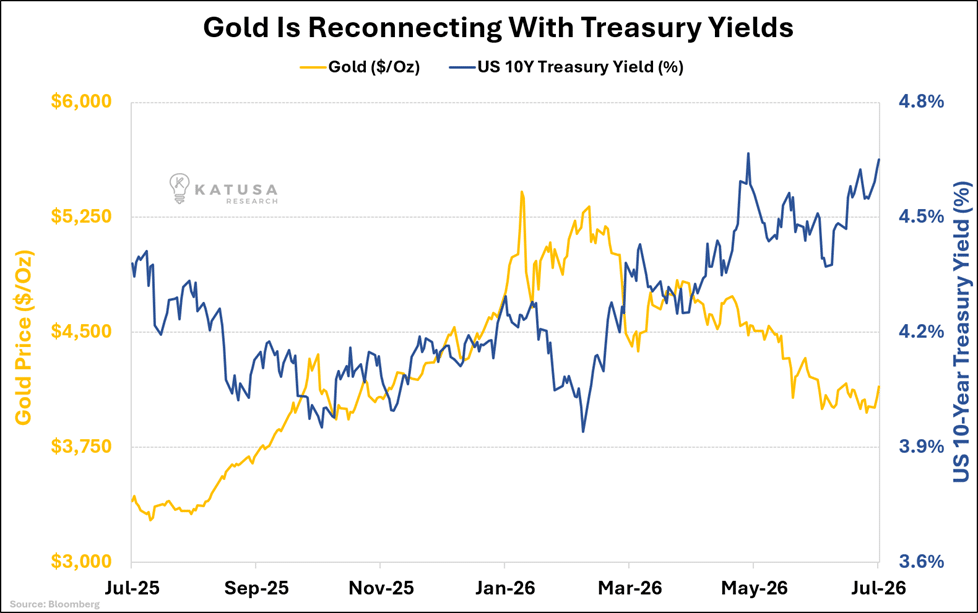
That reversal is what gold.
- Gold pays no interest, so it competes with bonds that do. US10Y currently is paying 4.67%, while gold costs you to store. Investors hold gold when they expect rates to fall. Once rates look set to stay unchanged, a bond paying interest becomes the better deal, so money leaves gold to get paid.
The war switched that old relationship back on, and the rate-cut premium that had carried gold to $5,417 drained away.
The drop picked up speed in March, and one seller made all the headlines.
- Turkey’s gold reserves fell by roughly 130 tonnes, most of it temporary gold-for-dollar swaps rather than outright sales, tipping central banks to net sellers for the first time in 33 months.
The headline looked alarming, so it handed nervous investors one more reason to sell, and for a while the selling fed on itself.
Buyers Never Really Left
One loud month of selling hid what came right after it.
China’s central bank kept buying straight through the fall, adding gold for a twentieth month in a row and posting its heaviest single purchase of the entire streak in June, just as the price sank.
Turkey had sold to cover an urgent need for dollars, and the rest of the world treated the lower price as a chance to buy.
The investors who own gold through funds behaved the same way.
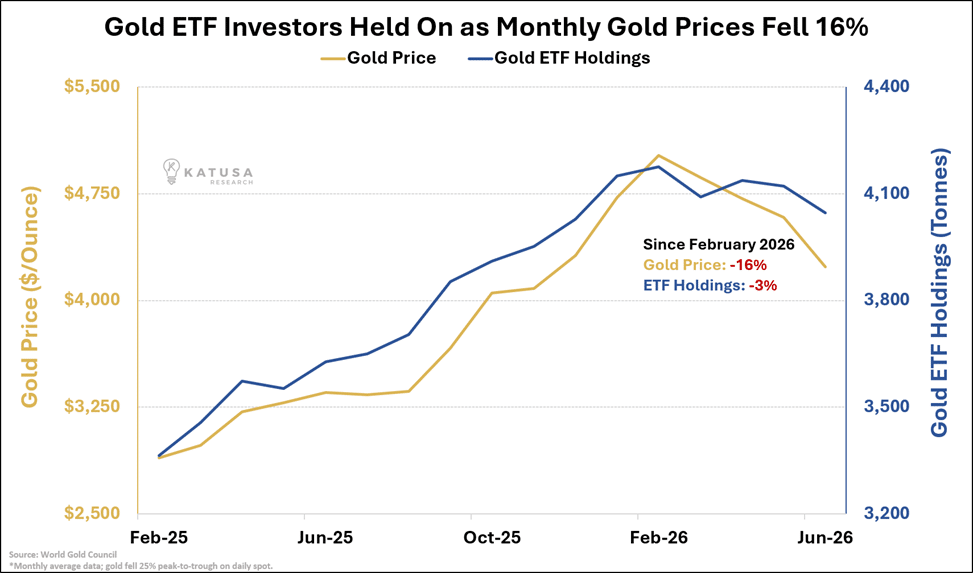
Even after the slide, gold held in ETFs finished the first half of 2026 at 4,047 tonnes, a touch above the 4,029 tonnes held at the start of the year.
The gold price fell hard while the tonnes held barely moved.
Tether has stayed in the game as well, still adding bullion to back its balance sheet.
The new chair, Kevin Warsh, has set up five task forces and brought in fifteen outside experts, including former central bank governors and economists from around the world, to rework how the Fed measures inflation and sets policy.
His stated aim is a framework that lets the Fed lower rates without stoking prices, and that is exactly the relief gold has been waiting for.
The Setup for the Next Leg
Add it all together, and this correction looks more like a floor forming than a top breaking.
The demand that drove gold is still here; the price is testing long-term support near $4,000, and the main weight on it is a rate fear that eases the moment oil calms down.
That’s the same setup that came before every big second leg in gold’s history, the 1976 bottom included.
The clearest opportunity may sit in the miners.
GDX has fallen about 36%, well past the metal itself, because the market assumes that lower gold means crushed profits, and the numbers tell a very different story.
Barrick’s Q1 2026 AISC was around $1,708/oz, Agnico’s 2026 cost guidance is roughly $1,500, and at $4,000 gold the sector is generating very wide margins. Newmont also showed strong leverage to gold in Q1, realizing about $4,900/oz and delivering record free cash flow.
So, the miners have fallen 36% straight into what should be the richest margins the industry has ever earned, right as earnings season begins.
The people who sold gold in 1976 were reading the headlines, while the people who held were reading the fundamentals, and the fundamentals today look promising.
Regards,
Marin Katusa
Get real-time alerts right away. Follow on X: @KatusaResearch and @MarinKatusa
Details and Disclosures
Investing can have large potential rewards, but it can also have large potential risks. You must be aware of the risks and be willing to accept them in order to invest in financial instruments, including stocks, options, and futures. Katusa Research makes every best effort in adhering to publishing exemptions and securities laws.
By reading this, you agree to all of the following: You understand this to be an expression of opinions and NOT professional advice. You are solely responsible for the use of any content and hold Katusa Research, and all partners, members, and affiliates harmless in any event or claim.
If you purchase anything through a link in this email, you should assume that we have an affiliate relationship with the company providing the product or service that you purchase, and that we will be paid in some way. We recommend that you do your own independent research before purchasing anything.
This is an expression of opinion and not professional advice. Neither Marin Katusa nor Katusa Research are registered broker-dealers or financial advisors. Past performance is not indicative of future results. When investing in speculative stocks, it is possible to lose your entire investment.
© 2026 Katusa Research / New Era Publishing Inc.