
The companies Uncle Sam buys next
I stopped laughing at government stock picks.
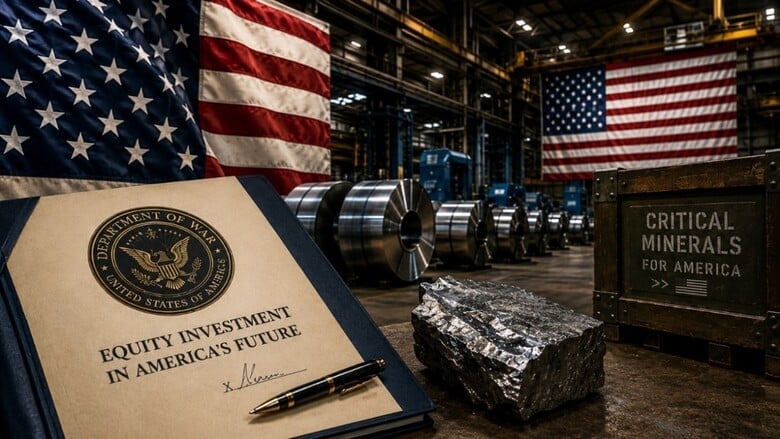
For thirty years, China ran the most patient heist in industrial history.
Beijing picked the industries the modern world would run on: rare earths, batteries, refining, and solar. It subsidized producers below cost and held the price until foreign competitors quit.
Every price war ends the same way: the side with deeper state pockets wins.
By the time Washington looked up, China controlled the modern economy’s physical backbone.
America still led in software and capital markets, but the materials behind semiconductors, grids, and AI infrastructure sat in Chinese hands.
Dominance at the application layer has a ceiling when a rival holds the raw inputs.
So, Washington entered the deal itself.
The Department of War took equity in rare earth miners and magnet makers.
The DOE backed uranium enrichment with loan guarantees. The CHIPS Act pushed billions into American fabs. Warrants, equity, offtakes: rebuilding what three decades of cheap imports dismantled.
America has run this playbook before.
Every time, the investors who spotted the bottlenecks early got paid.
Uncle Sam’s Stock Portfolio
The US government doesn’t normally buy companies. But it will if it has to.
It regulates them, taxes them, and when things get bad enough, bails them out. What’s happened since January 2025 breaks that pattern.
Washington built what we call ‘Uncle Sam’s Cap Table’.
Since then, the US government has put $21 billion into sixteen direct ownership deals. The Department of War led with seven. Commerce took a 9.9% stake in Intel. The Development Finance Corporation moved into critical minerals, healthcare, and infrastructure.
Instead of building a sovereign wealth fund, the U.S. built something more American: a cap table.
The tools will look familiar to anyone in private markets:
- Warrants give Washington a share of the upside if the company wins
- Equity stakes mean the government profits when the industry it is backing grows
- Loans pull projects across the gap that private money won’t bridge alone
- Offtake agreements create guaranteed buyers before a facility is even built
Each tool targets a specific problem Washington identified:
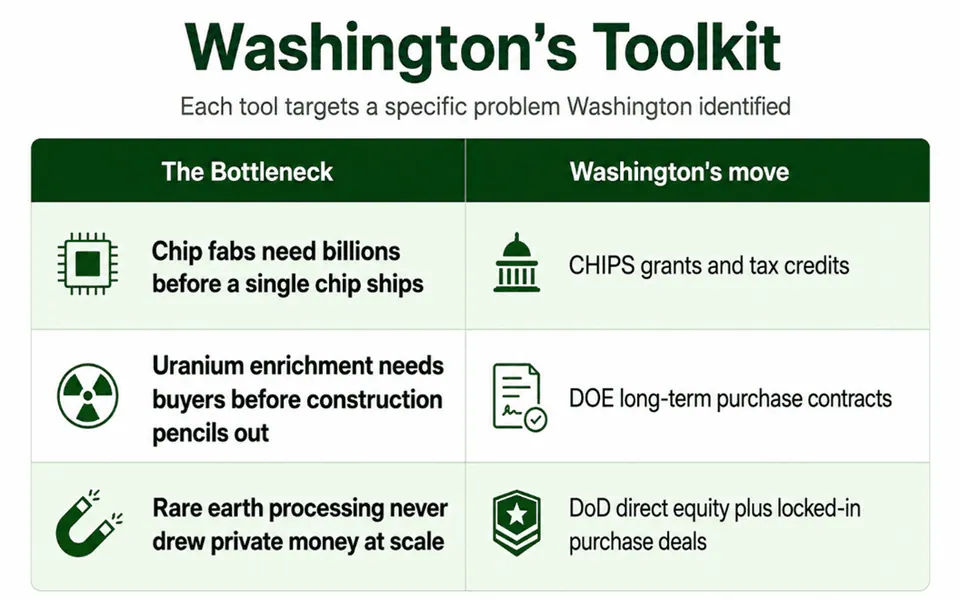
What Does That Look Like in Practice?
When Washington backed MP Materials, it committed to buying 100% of their magnet output for ten years above a fixed price floor.
I’ve sat across the table from mining executives for twenty-five years, and they all carry the same quiet fear: build the project, then go begging for a customer.
Washington just deleted that fear from MP’s spreadsheet.
- The full table runs in this month’s edition of Katusa’s Resource Opportunities: 16 investments across critical minerals, defense, energy, chips, and metals.
Nine of the sixteen are critical mineral plays.
That number jumped after Beijing restricted seven rare earth elements in April and October 2025.
Washington moved within weeks… New equity deals, expanded DoW purchase commitments, and faster permits for domestic processing.
These are strategic investments made carefully in companies that sit at a chokepoint America cannot supply on its own.
Korea Zinc is the only zinc and gallium hub outside Chinese control that can serve US demand. MP Materials runs the only active rare earth mine in the country.
Centrus Energy holds the only licensed HALEU enrichment facility on US soil.
Washington is buying control of things it cannot afford to import anymore.
Private money followed. Every government deal on this table pulled in more capital, because a government commitment cuts the risk on projects that private funds had passed on for years.
This is not how Washington normally operates.
Outside of a crisis, it almost never owns strategic private companies outright.
Uncle Sam rarely deploys direct ownership, warrants, and industrial financing at this scale unless the threat has become existential.
Washington’s Best Bets
When the free market cannot move fast enough, Washington stops watching and starts spending.
In all that time, Washington took direct equity stakes in private companies exactly once: TARP in 2008, when the financial system was days from collapse, and that was the rare exception.
Even then, the returns are clear…
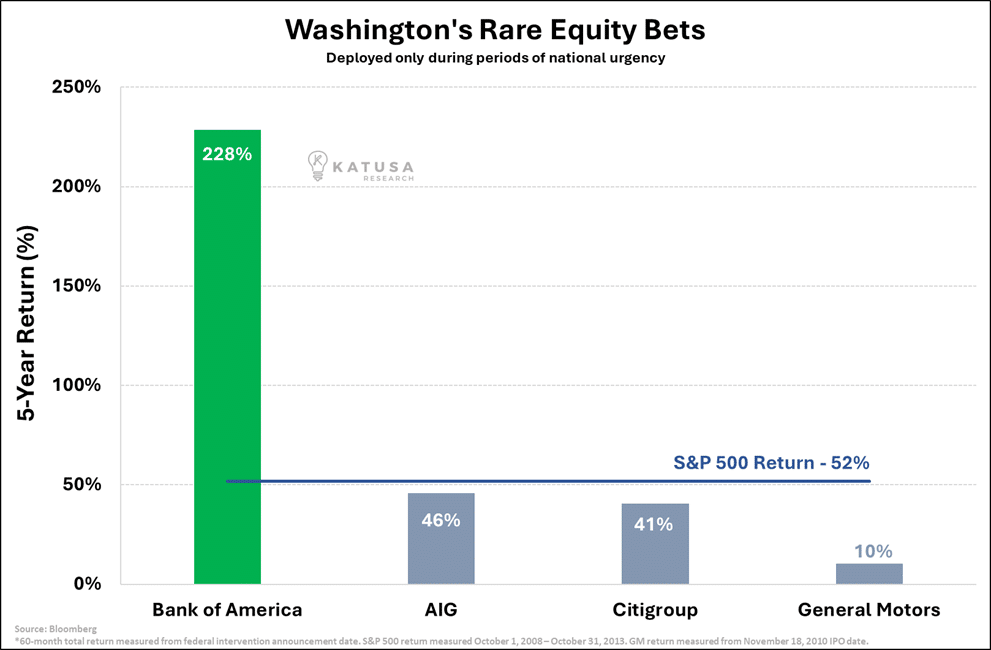
Three of the four government equity bets beat or matched the market during one of the most volatile stretches in modern financial history.
The data says Washington picks better than its critics admit.
Seventeen years later, Uncle Sam is running the same playbook. And the early returns look familiar.
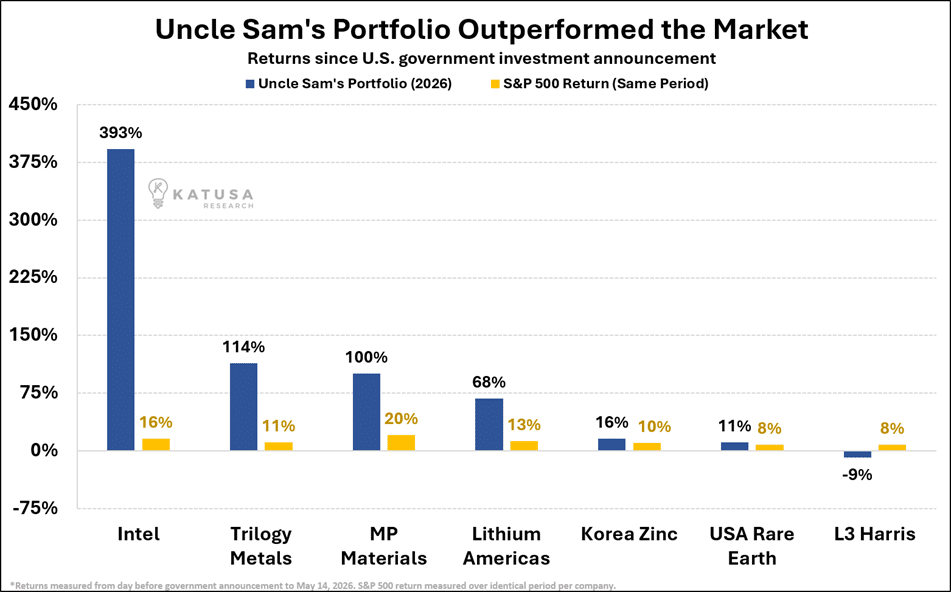
Every company where Uncle Sam took a position has beaten the S&P 500 over the same period, except one.
One miss out of seven is not a bad record for a portfolio built around national security bets.
Washington is backing companies that sit at chokepoints they can’t afford to leave exposed, and the market is starting to agree with that logic.
Take these three things with you:
- Government equity flipped from sell signal to buy signal.
When Washington takes warrants instead of writing bailout checks, it’s betting on upside, not absorbing losses. - Follow the offtake, not the grant. A guaranteed buyer changes a project’s economics more than free money ever does.
- Chokepoints get funded first. Critical minerals took more of Washington’s deals than defense, chips, and metals combined. That tells you where the next deals land.
That brings me to the question we spent the June KRO answering: where does Uncle Sam buy next?
Beijing’s export cuts left more chokepoints than Washington has filled.
And a short list of companies sits exactly where the last sixteen sat before the government showed up with a term sheet.
Regards,
Marin Katusa
Get real-time alerts right away. Follow on X: @KatusaResearch and @MarinKatusa
Details and Disclosures
Investing can have large potential rewards, but it can also have large potential risks. You must be aware of the risks and be willing to accept them in order to invest in financial instruments, including stocks, options, and futures. Katusa Research makes every best effort in adhering to publishing exemptions and securities laws.
By reading this, you agree to all of the following: You understand this to be an expression of opinions and NOT professional advice. You are solely responsible for the use of any content and hold Katusa Research, and all partners, members, and affiliates harmless in any event or claim.
If you purchase anything through a link in this email, you should assume that we have an affiliate relationship with the company providing the product or service that you purchase, and that we will be paid in some way. We recommend that you do your own independent research before purchasing anything.
This is an expression of opinion and not professional advice. Neither Marin Katusa nor Katusa Research are registered broker-dealers or financial advisors. Past performance is not indicative of future results. When investing in speculative stocks, it is possible to lose your entire investment.
© 2026 Katusa Research / New Era Publishing Inc.