
America is Buying Russian Diesel Again
Diesel is $6.28 a gallon and the first Russian tanker covers two hours of it.
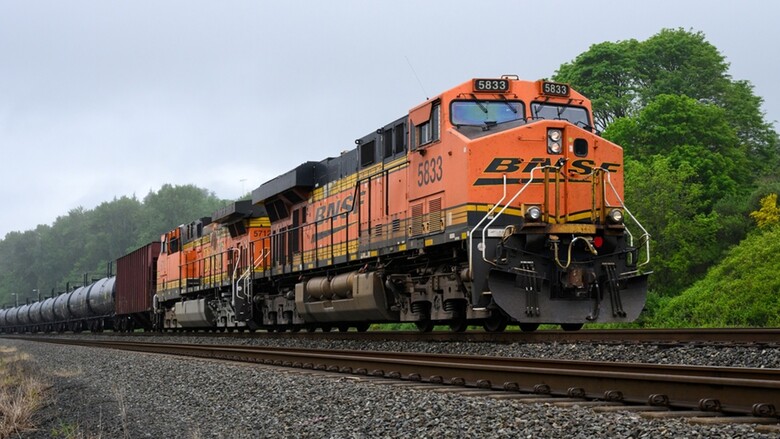
In a Berlin hotel back in February 1898, the winter before the century turned, Emanuel Nobel handed Rudolf Diesel eight hundred thousand marks.
That’s about $37 million today for the rights to an engine that barely ran.
Every gallon you've pumped at $6.28 this month runs on the machine he bought that afternoon.
Nobel's family owned the oil fields at Baku and the first tanker fleet on earth. What they didn't have was a machine that could burn their own crude. By 1903, his river tankers had thrown out their steam engines for it.
Russia moved oil on Nobel's engine for a century, and in 2021 it was still one of America's three biggest foreign oil suppliers.
Washington banned all of it in March 2022.
Since then, not one barrel of Russian diesel has docked in America, and that held right up until last Thursday, when a tanker loaded 40,000 tonnes at Primorsk and signalled New York.
Two Wars Took The World's Diesel
Diesel moves everything people eat and build. And this year two wars took it off the market at once.
Iran first. Tanker traffic through Hormuz fell to a trickle after the war began in late February, and the Gulf's medium, sour crude yields more diesel per barrel than shale.
The same Thursday the Russian tanker loaded, Iran's Revolutionary Guard said seven tankers were hit or mined near the strait. Brent settled at $116.72 the next day, up from $100 on October 7.
Then Ukraine. Its drones took Russian refining down to 3.8 million barrels a day in June, the lowest in more than twenty years, with diesel output down almost 30%. Moscow banned diesel exports in July.
Russia normally supplies about one barrel in ten of the world's diesel exports, and since July it supplied almost none.
The Last Diesel Pump on the Street
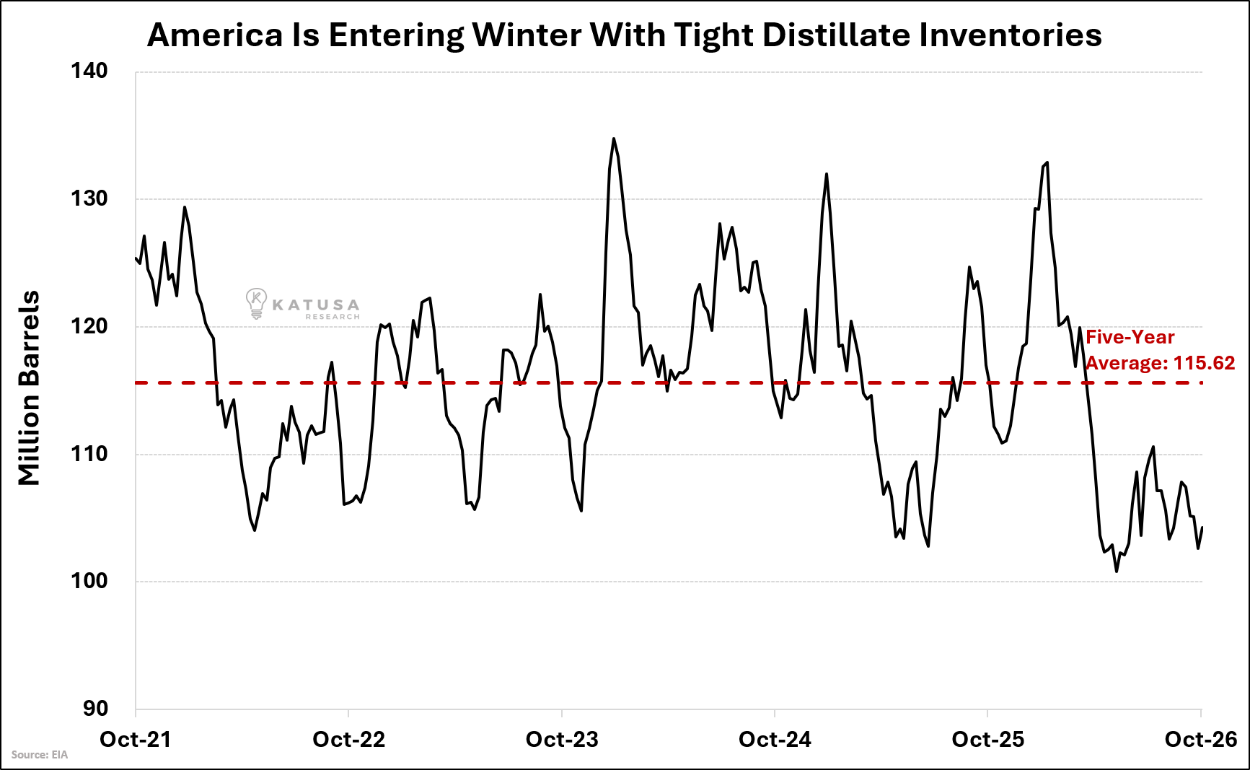
American refineries ran at 98% of capacity in the last week of August, the highest since 2018.
The trouble is who's buying.
Europe lost Russian diesel to its own embargo in 2023, and its buyers now outbid the Iowa farmer for Gulf Coast barrels. In late July, US distillate exports hit 1.88 million barrels a day, the most on record, and stocks that month fell to the lowest for any August since 1951.
A refinery buys crude and sells diesel. Subtract one price from the other and you get the crack spread, which is what refiners earn for running Nobel's machine.
Before the Iran war, the Gulf Coast crack ran about $20 a barrel. In mid-September it hit $117.92, a record.
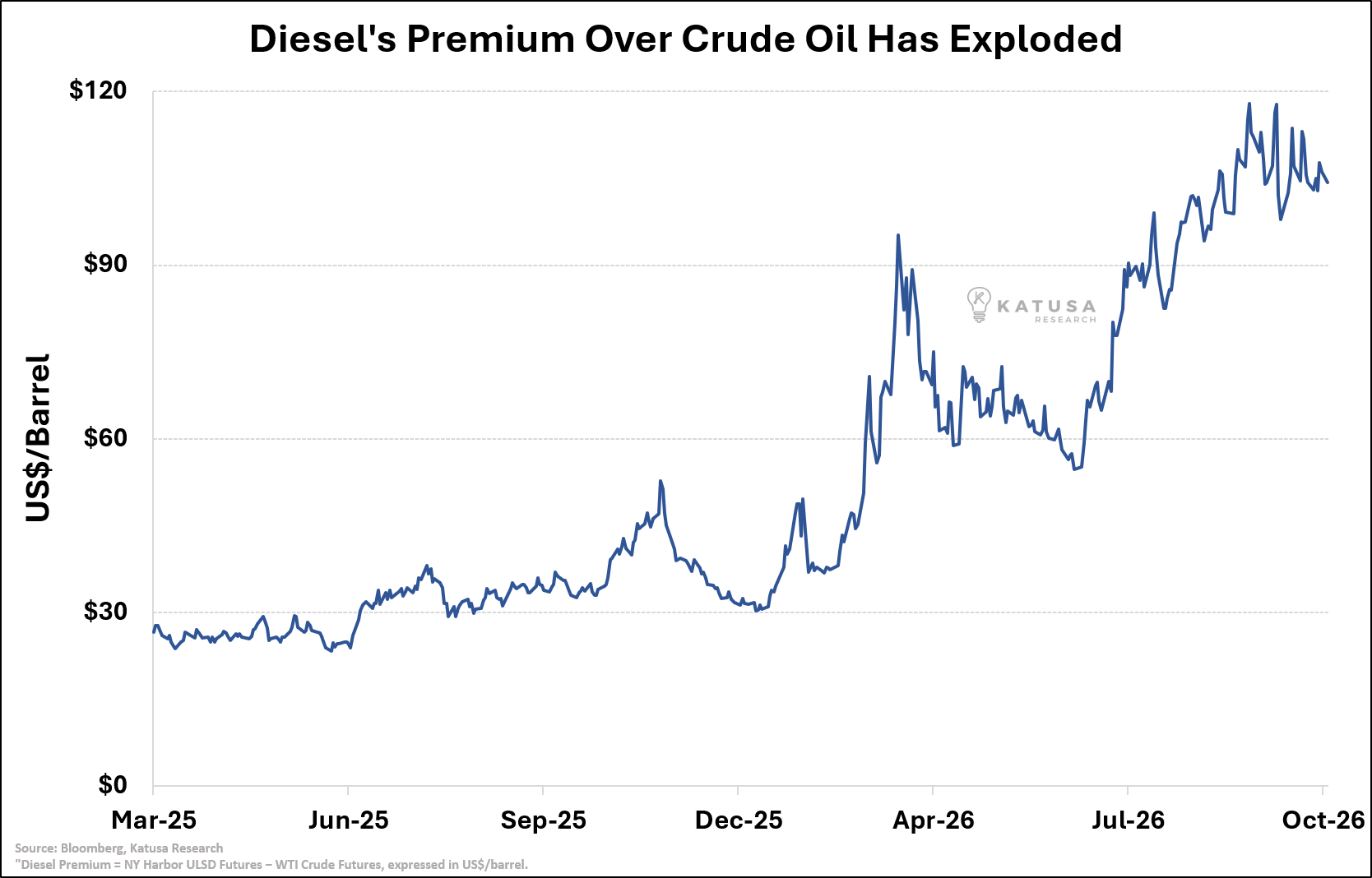
Nobel's machine now charges more per barrel than crude itself cost two years ago.
Diesel hit $6.28 a gallon on October 19, up 73% in a year. Crude explains part of that. The rest is the world bidding for what American refineries cook.
What One Tanker Changes
In the first week of October, Washington told Germany and France to open their diesel reserves or face a US export ban.
And on October 8 Trump promised no new strikes on Iran before the midterms.
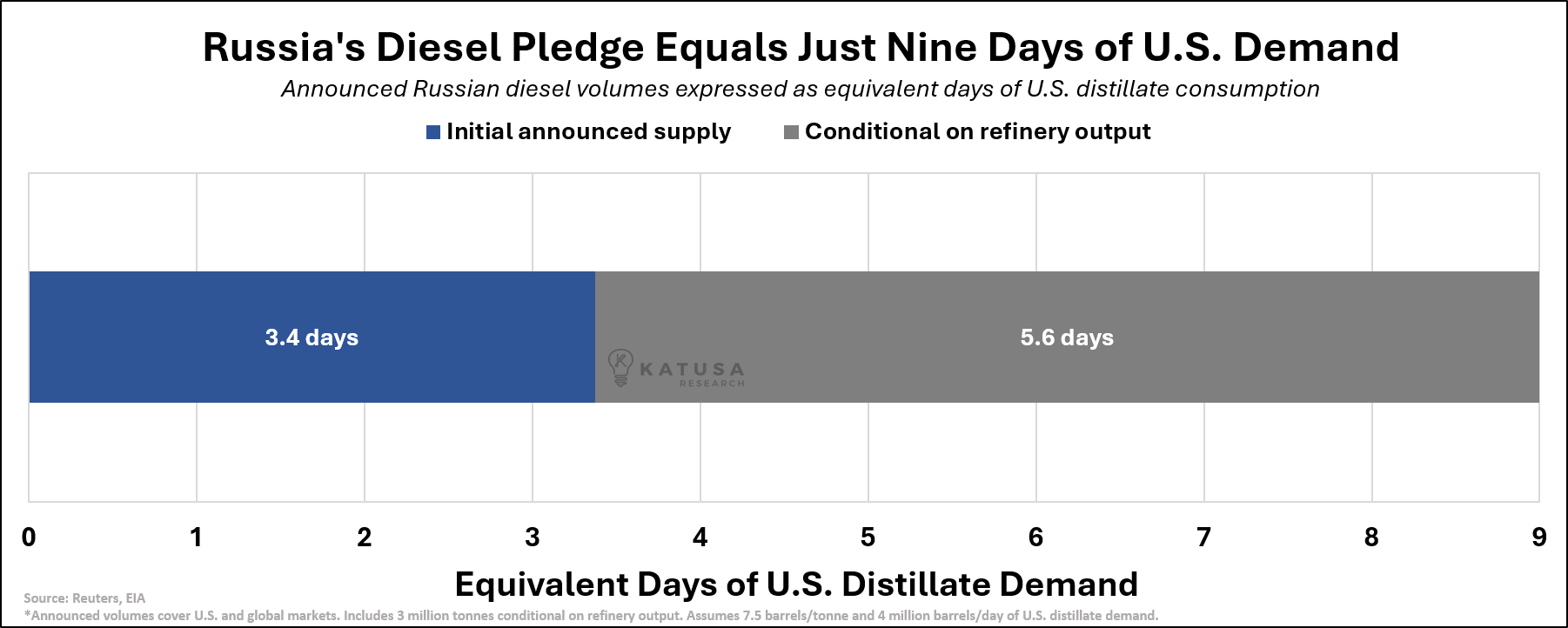
The next day he posted that Putin had agreed to supply about 2.25 million barrels of diesel at once, roughly 11 million more by December, and 22 million after that "based on the condition of Russia's refineries."
- Treasury issued the license the same day: Russian diesel can be bought and landed in the United States until April 7, 2027.
Twelve days later the Energy Department offered a third of the Northeast heating-oil reserve on loan, and the Agioi Fanendes loaded at Primorsk.
The midterms are November 3. The ship is listed for New York around November 7, though its manager won't confirm the discharge port, so it may yet turn up somewhere else.
Forty thousand tonnes is about 300,000 barrels, and America burns about 4 million barrels of distillate a day.
That ship covers under two hours of US demand.
At the pump, nothing moves: retail diesel rose eight cents in the two weeks after the deal was announced.
The license is the real news. Treasury just let one barrel in ten of the world's diesel exports back into the Western pool for six months. On April 7, the license lapses unless somebody in Washington renews it.
I don't know whether they will. The people who'd decide haven't been elected yet.
Miners pay the bill. And the ones who feel it are the open pits: a high strip ratio, a long haul up the ramp, and a fleet that drinks from the same pump as the trucker. Where fuel runs a tenth to a quarter of cash costs, a 73% move in diesel shows up in cost per ounce.
If Hormuz reopens, and the drones stop, the crack falls fast, and the license becomes a footnote. Until then, the crack spread is the number to check before you check gold.
Nobel paid for the machine because Baku's oil was worth little without it. Now Washington is paying Russia for diesel out of the refineries Ukraine keeps setting on fire.
In my premium newsletter – Katusa’s Resource Opportunities – my readers already own producers whose power comes off a grid or a dam…
And royalty names that collect a share of the metal and pay for none of the fuel.
Regards,
Marin Katusa
Get real-time alerts right away. Follow on X: @KatusaResearch and @MarinKatusa
Details and Disclosures
Investing can have large potential rewards, but it can also have large potential risks. You must be aware of the risks and be willing to accept them in order to invest in financial instruments, including stocks, options, and futures. Katusa Research makes every best effort in adhering to publishing exemptions and securities laws.
By reading this, you agree to all of the following: You understand this to be an expression of opinions and NOT professional advice. You are solely responsible for the use of any content and hold Katusa Research, and all partners, members, and affiliates harmless in any event or claim.
If you purchase anything through a link in this email, you should assume that we have an affiliate relationship with the company providing the product or service that you purchase, and that we will be paid in some way. We recommend that you do your own independent research before purchasing anything.
This is an expression of opinion and not professional advice. Neither Marin Katusa nor Katusa Research are registered broker-dealers or financial advisors. Past performance is not indicative of future results. When investing in speculative stocks, it is possible to lose your entire investment.
© 2026 Katusa Research / New Era Publishing Inc.